

GCF Certification for Non-Public Networks and Utility Operators
- 08 Sep 2026
- Asif Hamidullah - GCF Office
Introduction
We’re all familiar with networks that provide mobile services to the public at large. In some applications, however, the preferred option may be to deploy a private network, or what is referred to as a non-public network (NPN). This type of network provides mobile cellular connectivity to a defined set of users and/or connected IoT devices, often within one company or organisation.
By using a NPN, the organisation can deliver reliable connection on a dedicated network, while ensuring security, access control, capacity or low latency capabilities, that may be needed for specific applications such as autonomous robots or critical processes. It can also make it easier for an organization to provide the necessary mobile coverage in difficult or geographically distributed environments, particularly indoors or remote sites not covered by commercial operators.
A non-public network is built on the same 3GPP standards used in public networks, being either 4G LTE or 5G NR, but provides a more controlled and versatile solution across many use cases and industries – including manufacturing, mining, oil & gas, maritime, utilities and also for academic research.
Cellular NPNs also overcome many of the issues prevalent with current Wi-Fi networks, including providing better coverage, extended range, using dedicated spectrum, built-in security, and stronger authentication for users via dedicated SIM Cards or eSIM profiles. Devices on a Wi-Fi network must also handle frequent switching from one access point (AP) to the next, which can reduce their ability to always provide a consistent connection, which is much better handled by cellular solutions available today.
Private network operators and device vendors face similar challenges currently present in commercialisation of products on public networks, in terms of standards compliance, and interoperability in a multi-vendor ecosystem. This is where Global Certification Forum (GCF) plays a key role – as this article will discuss.
Where are NPNs used?
The adoption of NPNs is growing strongly. Worldwide, more than 2,000 organisations are now deploying one or more private networks, according to the Global mobile Suppliers Association (GSA). Deployment numbers have been rising since 2019 at a compound annual growth rate (CAGR) of 37%. According to GSA, the highest number of private network deployments are in smart manufacturing, following by education/academia and mining.
Private networks have been deployed in 88 countries, with the most networks in the USA, Germany, the UK, China and Japan. This geographical distribution is due in part to government and regulatory decisions, such as making available dedicated spectrum for NPNs that is kept separate from the spectrum used by commercial mobile network operators.
Private networks are used across many industries, such as enabling Industry 4.0 in manufacturing, and improving safety and efficiency in mining automation. Private LTE and 5G networks are an essential part of smart warehouses, and provide safe, reliable connectivity in airports and seaports, and can also play a key role in today’s smart grids and energy systems.
| Examples of verticals using NPNs |
| Device testing and interoperability laboratories |
| Oil and gas |
| Manufacturing |
| Railway networks (urban and nationwide) |
| Agriculture |
| Public venues and other neutral hosts |
| Seaports |
| Education and academic research institutions |
| Smart cities |
| Hospitals |
| Defence and peacekeeping |
| Sports media and events (temporary installations) |
| Mining facilities |
| Airports |
| Logistics and warehousing |
| Public protection and disaster relief (including public safety) |
| Power utility networks |
| Hospitality |
| Intelligent buildings and offices |
| Power plants |
| Retail |
| Real-time video and broadcasting (fixed or nomadic) |
| Aviation networks |
| Maritime networks |
| Financial services networks |
| Racetracks |
| Motorways and highways between cities |
| Water utilities |
Figure 1: Verticals using NPNs (sources: Ericsson, EUTC and GSA)
To give just one example, Aramco Digital is launching a private network across the Kingdom of Saudi Arabia, operating in the 450 MHz frequency range. This ‘National Industrial Network’ will provide wide-area coverage for the industrial sector, enabling reliable connectivity for a broad range of industrial IoT applications, including asset monitoring, fleet tracking, environmental sensing, video monitoring, smart metering, and lighting control.
Another scenario where NPNs’ capabilities are highly relevant is in the operation of power grids, which are being upgraded to add control and intelligence features that qualify them as a ‘smart grid’. With the shift toward renewables, and the need to add bi-directional capabilities, there are tough demands on the communication networks used for power grids, and cellular private networks drive significant advantages and scale over other competing communication technologies, such as PLC.
For these grid applications, private networks are stepping up, providing high security, excellent reliability, resilience, and flexible deployment and efficient data transmission. Private networks ensure security, reliability and even achieve millisecond-level end-to-end latency, while handling hundreds of thousands of terminals, such as smart meters, accessing the network at the same time.
| Examples of use cases for NPNs |
| Flexible automated and assisted production |
| Connected worker |
| Push-to-talk communication |
| Environmental monitoring |
| Autonomous vehicles and robots |
| Remote-controlled equipment |
| Drone inspections |
| Predictive maintenance |
| Digital adherence safety and quality |
| Mission Critical Services |
| Security and access control |
| Computer vision |
| Digital twin |
| Real-time video and broadcasting |
| Smart factories |
| Smart grids |
Figure 2: Use cases for NPNs (sources: Ericsson, and EUTC)
As systems add more and more sensors, with the ability to handle AI increasingly at the network edge, the demand for fast, reliable LTE and 5G connectivity is only going to continue growing – and NPNs will be able to meet that demand.
Technologies used in NPNs
Private networks are based on the same 3GPP standards that are used by commercial operators – 4G LTE or 5G. Either of these can provide secure, efficient networks.
The choice between the two standards often depends on the specific use case – for example, if the extra capacity and spectral efficiency of 5G is required, or if it is determined by specific regulations such as NPN dedicated, frequency bands or technologies. While private networks started mainly with LTE technologies, 5G has accounted for more than half of the deployments of NPNs since 2022, and this proportion is increasing every year, according to GSA.
Private networks became popular in part due to the development of LTE-Advanced technology, which was introduced in 3GPP Release 10. LTE-Advanced provided improved network capacity, throughput and latency, and the standard was further enhanced with the addition of LTE-Advanced Pro (in 3GPP Releases 13 and 14).
For private 5G networks, 3GPP Release 16 provided the specifications needed for organisations to build non-public networks based on 5G. Network slicing was improved in Release 17, which also introduced Reduced Capability (RedCap) devices which are less complex, smaller and less power-hungry compared to regular 5G devices, and can more efficiently address the needs of the IoT industry.
Overall, there are two basic types of NPN:
- Standalone networks (SNPNs), where all functions are within a defined area, and the only connection between the NPN and the public network is a secure firewall
- Public network integrated NPNs (PNI-NPNs) that are deployed together with a public network, so that some uses cases within the defined area can still be handled by the public network (while others are handled by the NPN). This means that the NPN and the public network share the same radio access network (RAN). This can be implemented by using RAN sharing or network slicing, to create two or more logically independent networks using one physical radio network.
The frequency bands used for a private network usually depend on the regulations in a particular country, and the technical demands of the application – for example, the 450 MHz band is well-suited to long-range communication, making it a preferred option for utilities who need an NPN that can cover a large, remote area with limited capacity. NPNs may use shared licensed spectrum, licensed spectrum allocated on a national or local basis (such as band 68 for PPDR – Public Protection and Disaster Relief in Europe), or unlicensed spectrum such as the CBRS band in USA (3GPP band 48 and n48).
Due to its industry-wide reach, GCF holds valuable data on which 3GPP frequency bands are tested most commonly. Figures 3 and 4 show the number of devices certified by GCF that incorporate each frequency band (Figure 3 shows support for LTE bands, while Figure 4 shows support for 5G bands).
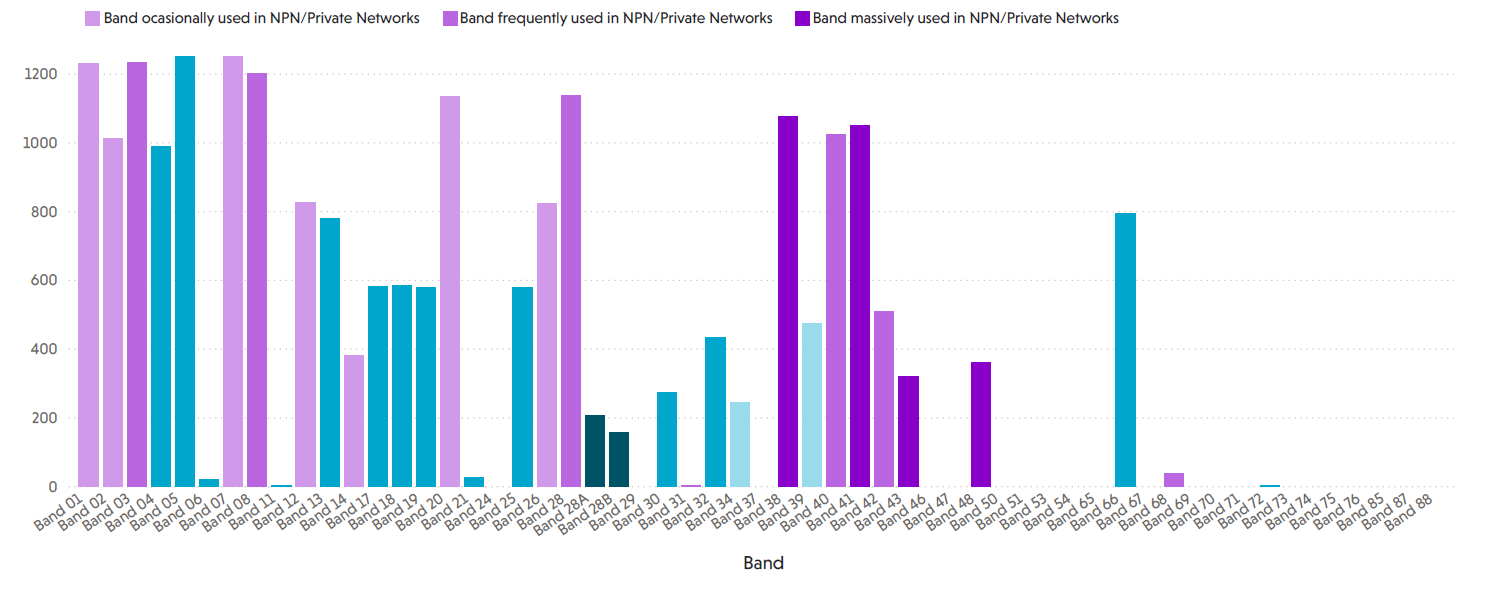
Figure 3: Number of LTE certified devices since 2024 (up to August 31st 2026) incorporating each frequency band – focus on bands most used in NPN/Private networks
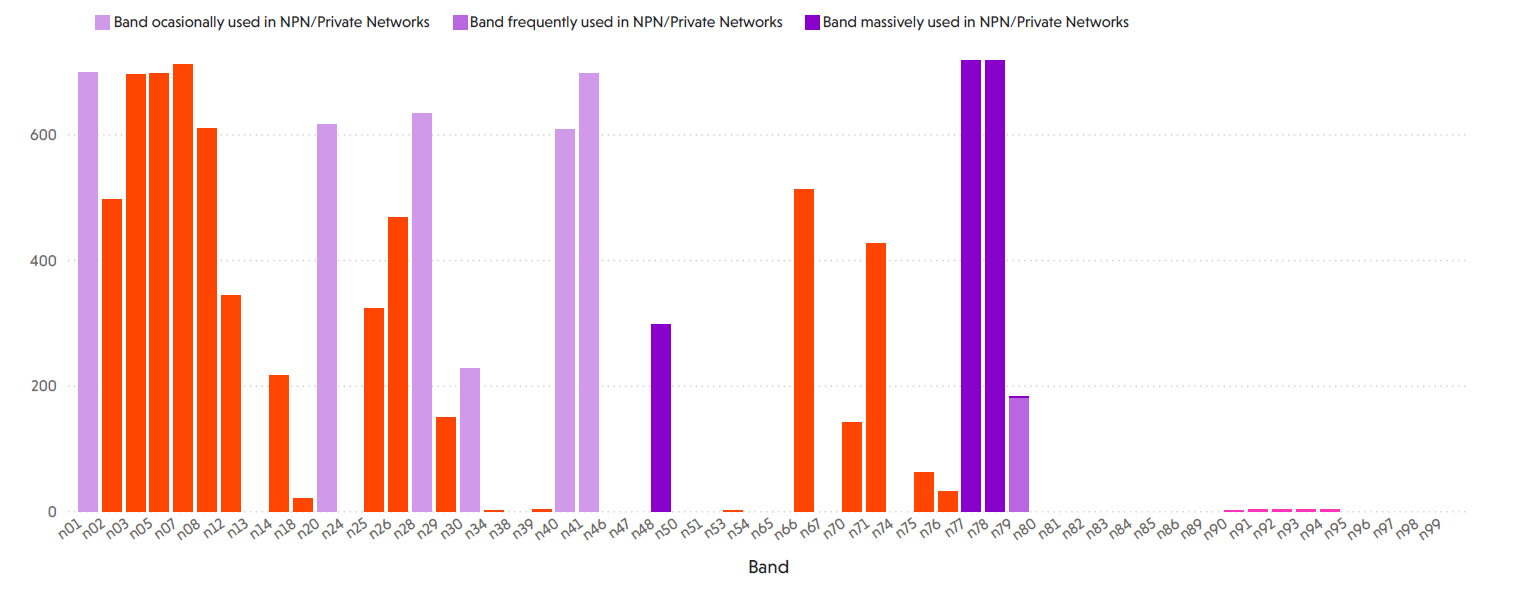
Figure 4: Number of 5G Certified devices since 2024 (up to August 31st 2026) incorporating each frequency bands – focus on bands most used in NPN/Private networks
Also, Figure 5 shows which radio access technologies have been most widely used for private networks worldwide.
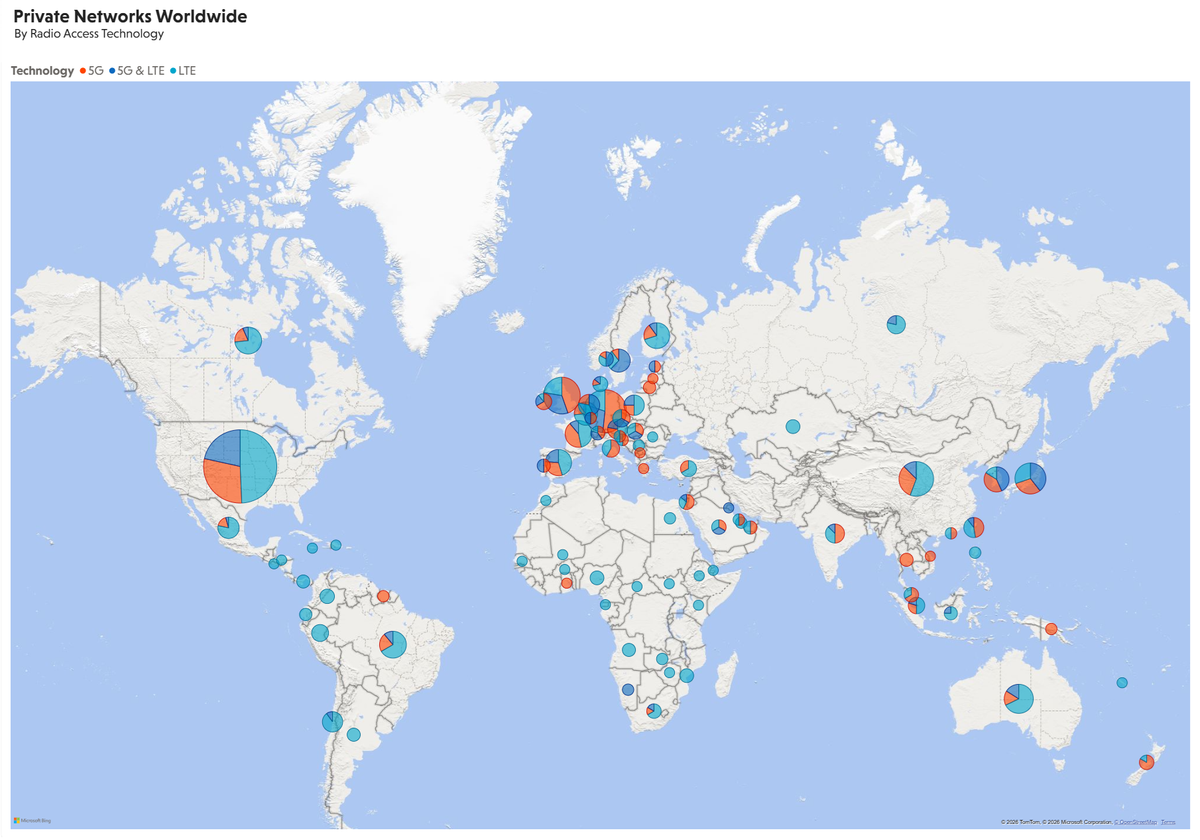
Figure 5: Map of dedicated bands for private networks worldwide (source: GSA GAMBoD – Private Networks)
GCF certification for NPNs
While private network operators do have more control than public or consumer networks, they still need to be confident that all devices on their network conform to the appropriate 3GPP standard, and ensure interoperability, safety and reliable performance.
This compliance is verified by certifications from GCF.
GCF Certification is already available for devices based on 3GPP wireless standards being used in utility and private networks, including the 400 to 450 MHz bands and many other 3GPP frequency bands.
GCF is constantly evolving to include enhancements as needed by the industry, and additional bands or 3GPP-based technologies can be introduced in GCF processes. GCF has developed agreements with the key industry stakeholders to develop LTE and 5G private networks, including the 450 MHz Alliance, EUTC, 5G-ACIA, and GSA – and GCF is actively working with members and partners to tackle the specific needs of non-public networks.
In terms of particular technologies used in private networks, GCF processes are in place to introduce requirements used by private networks, such as 5G SA and 5G-Advanced requirements, 5G RedCap/eRedCap, URLLC/eURLLC or remote SIM Provisioning for Consumer and IoT eSIM.
GCF has different membership categories for NPN and Utility Operators and Communication Services Providers (CSPs): they can join as Utility Operators or Mission Critical Communication Operators (MCCOs) if they provide services in these specific verticals. Also, Commercial Operators also commercializing or operating Private Networks on behalf of other companies can join GCF as Full Operators (if they own the spectrum where the services are operated) or Associate Operators (if they don’t directly own or manage the spectrum).
All operator members can participate actively in GCF’s Steering, Agreement Groups, and Work Streams. Specifically, the Mission Critical Services Work Stream is available for operators to influence the certification criteria for devices and services in the 3GPP Mission Critical ecosystem.
What’s next
Whether they are based on 4G LTE or 5G technology, NPNs provide a dedicated and independently-managed network. They can be optimized for the performance needs of any particular application, while providing secure, reliable mobile coverage.
3GPP Releases 18 and 19 improve some key areas for private networks, such as achieving better energy efficiency, uplink performance and AI-driven automation for network management. Future private networks will also be able to integrate with non-terrestrial networks, adding satellite connectivity for remote deployments.
With strong growth forecast for the private network market, GCF is a key part of the industry ecosystem, ensuring reliable roll-outs and safe operation. By engaging with GCF, Utility Operators, MCCOs and NPN Operators are at the centre of new developments, as new capabilities and technologies drive the private network sector onwards.
Author(s)
